
.svg)


.svg)
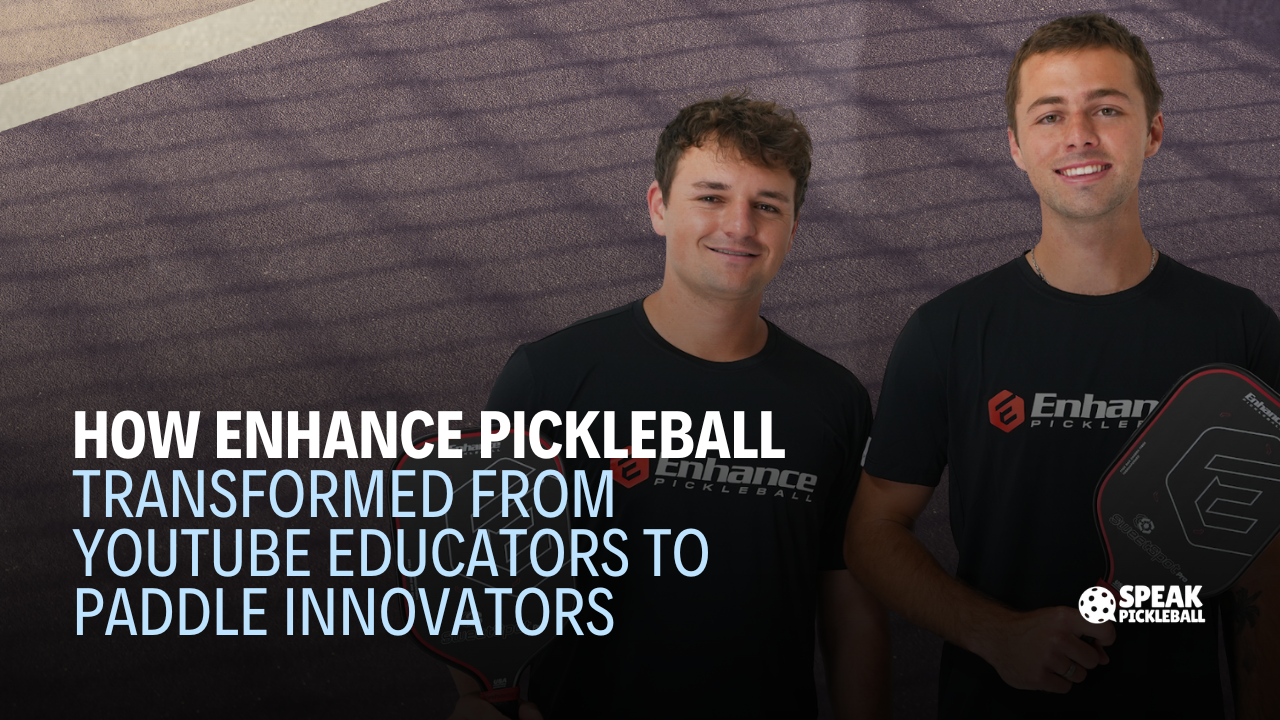
Who Are Enhance Pickleball?
The morning Connor Hance launched the Dink Master, he sat in a Los Angeles diner with Drew Baird, his business partner and former college roommate, watching the clock tick toward 11 a.m. They'd posted a video about their new training aid that had already garnered hundreds of thousands of views, but neither knew if curiosity would translate to sales.
When the email blast went out, orders started flooding in—dozens by day's end, more than they'd ever seen. It was November 2022, and the two former UCLA tennis players, then just 24 and 22, had stumbled into something neither had planned for: a pickleball empire built on broken bones and dashed dreams.
Born from the Tennis Factory
Connor was born into tennis the way some children are born into family businesses. His parents, both coaches, ran a tennis facility in Torrance, California, where Connor and his three siblings essentially lived. His older sister, two years his senior. His younger sister, four and a half years behind. His brother, improbably, nine and a half years younger. The family religion, as Connor puts it, was tennis.
"My parents didn't care about school at all," Connor recalls. "They just wanted us to play tennis as much as we possibly could."

By 11, Connor was practicing six hours daily, a response to what he perceived as his own athletic inadequacy. His mother called him clumsy—not meanly, just observationally—and Connor internalized it, obsessively drilling footwork patterns and strength training to overcome what he saw as his physical limitations. The work paid off, at least temporarily. By 14, he was the number one junior recruit in the nation, fielding interest from every major college program.
But Connor possessed something rare in the junior tennis world: brutal self-awareness. While his peers dreamed of Wimbledon, Connor studied his opponents with a statistician's clarity. He played Taylor Fritz, now a top-10 professional, ten times in juniors. Lost every match. Brandon Nakashima, Jenson Brooksby—future ATP tour players.
"When I was 14 or 15, I was playing guys who were just different," Connor explains. "You could tell there was something—some physical property in their body—that I was lacking."
The Two-Footed Breaking Point
His hunch about his tennis career became a very weird reality that was completely out of his control.
His first foot broke during the opening match of Connor's sophomore season at UCLA, a routine overhead against Indiana.
He knew immediately—having broken his arm years before, he recognized the sensation of bone giving way. The collegiate season was over. Six months of preparation evaporated in a single misstep.
His family, devoted disciples of tennis, sat courtside in shock. But Connor, ever the pragmatist, found silver linings within days.
More time for academics. A chance to explore that nascent business interest he'd been nurturing since high school, when he and friends would discuss finding "their next tennis"—something to pursue with the same obsessive intensity.
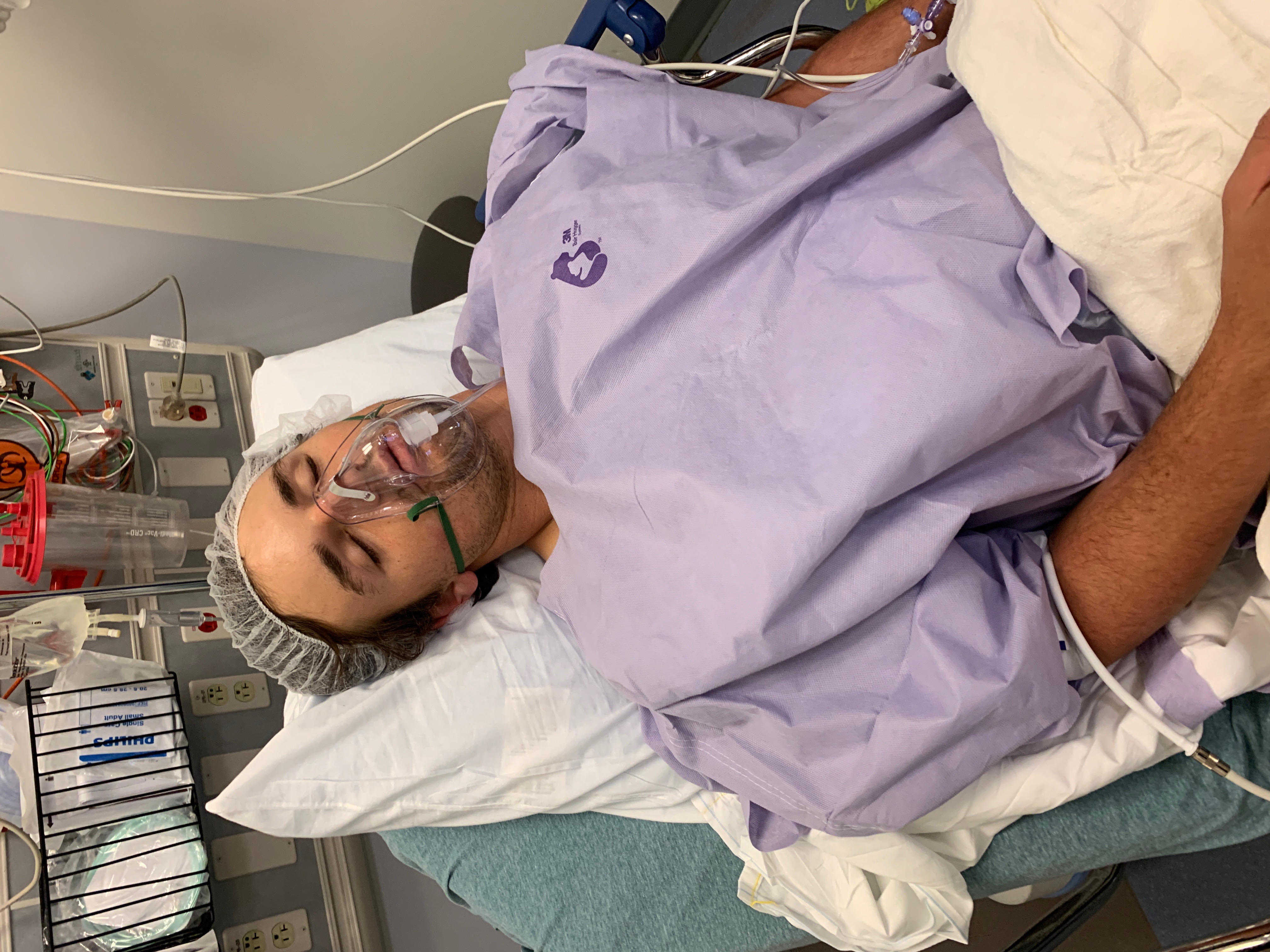
Three months later, celebrating USC's defeat, Connor joined the court-storming pile in a walking boot. As the crowd surged and bodies collided, his other foot snapped. Just from jumping.
The X-rays revealed what seemed medically improbable: stress fractures in both feet that had been developing silently for years, waiting for the smallest provocation to fail completely.
Then, against all odds, it got worse.
After a year of rehabilitation, Connor returned for three matches his junior year. In the third, against UCF, he fell and broke his hand.
A week later, COVID shut down college sports entirely. The timing was so absurd it felt scripted—as if the universe was sending increasingly unsubtle messages about his tennis future.
Enter Drew Baird
Drew Baird was everything Connor wasn't as a tennis player—naturally gifted, fluid, destined for professional success. He'd left North Carolina at 14 for IMG Academy, the factory that produced Andre Agassi and Maria Sharapova. By 16, he'd climbed to 12th in the world juniors, the same territory once occupied by players like Daniil Medvedev.
Their first meeting, at the Kalamazoo championships when Connor was 18 and Drew 16, ended with Connor's 6-0, 6-3 demolition and Drew's puzzling request while shaking hands: "Put in a good word at UCLA for me."
"I thought he was being a douche," Connor remembers. "Like, 'I just destroyed you, now recommend me to your coach.' I told him the score would do that."
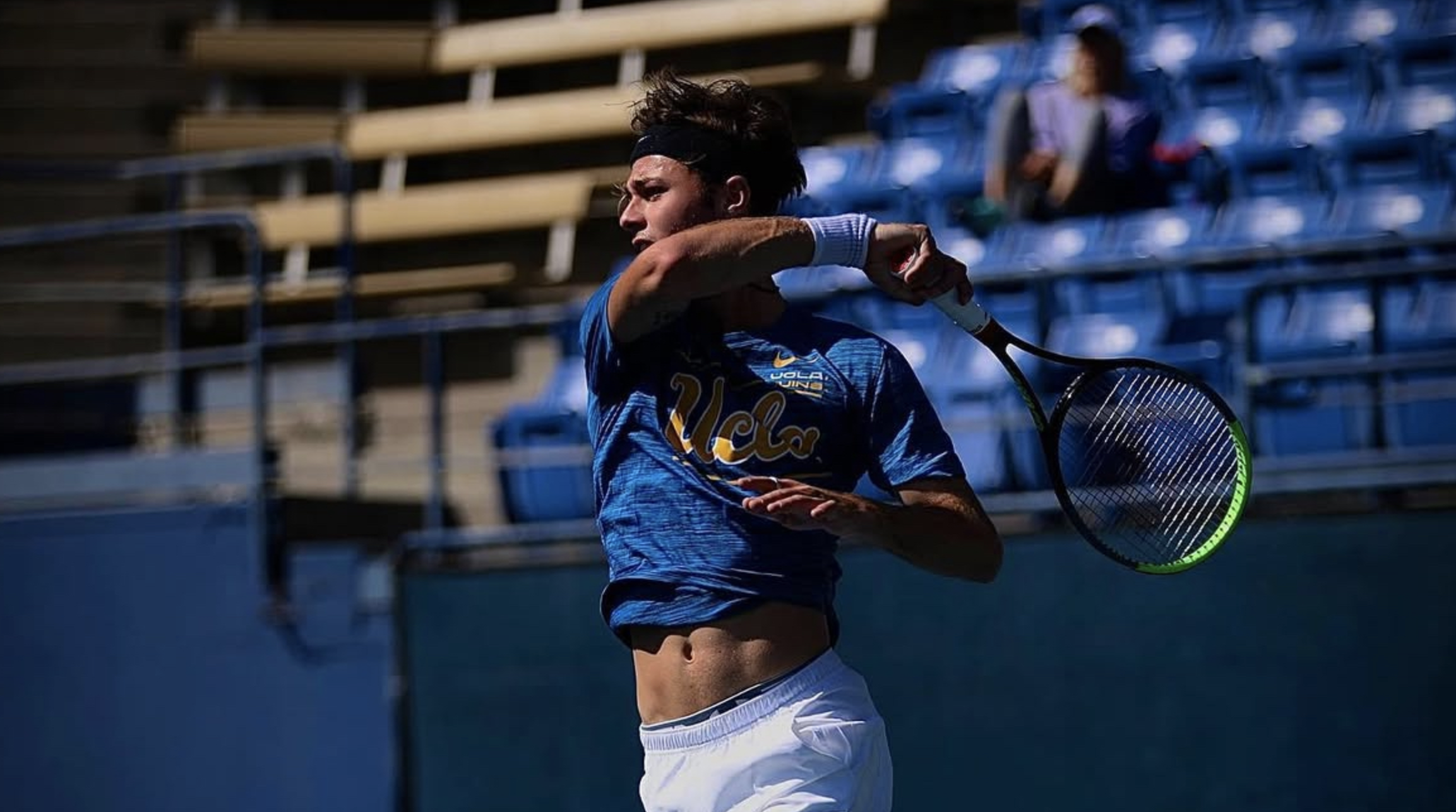
Two years later, Drew shocked everyone by committing to UCLA—a North Carolina kid choosing Los Angeles over Duke or UNC, defying geographic logic and family tradition. When COVID hit, Drew found himself stranded in LA, with nowhere to go. Connor brought him home for Thanksgiving, then the following year we decided to become direct roommates within our team house.
They made unlikely roommates. Connor, methodical and strategic, was already experimenting with business ideas. Drew cycled through obsessions—tennis, video editing , graphic design. But when Connor's fledgling pickleball business needed video content, Drew's scattered talents suddenly coalesced into something valuable.
The Pickleball Tape That Started Everything
Before pickleball, Connor spent months developing a vegan, sugar-free whipped cream, hiring a food scientist who ultimately delivered samples that separated within days. The product worked perfectly in his kitchen but couldn't survive commercial distribution.
"I was 23, living at home, teaching tennis, failing at making whipped cream," Connor says. "My friends were getting jobs at consulting firms. I was trying to figure out shelf stability for coconut cream."
Connor's entry into pickleball commerce began with a problem at his parents' facility. He needed to mark temporary pickleball courts on tennis courts but couldn't find appropriate tape. Regular masking tape required constant replacement. His solution: industrial parking lot tape from Alibaba, the kind used to mark loading zones, repurposed for pickleball courts.
He listed it on Amazon with minimal expectations. Two rolls sold immediately. By year's end, working from his childhood bedroom while teaching tennis lessons to pay bills, Connor had moved thousands of rolls
"I'd never sold that much of anything," he recalls. "I was selling these eye masks I'd sewn myself for $20 each. Suddenly I'm doing way more in tape sales right off the bat."
The tape's success funded Connor's next experiments, most of which failed spectacularly. A device to pick up balls without bending over. Generic nets that couldn't compete with established brands. Tens of thousands of dollars vanished into inventory that wouldn't move.
The Content Revolution
When Connor launched the Dink Pad—a thin wall protector with target zones—he knew it needed video marketing. Drew, in another of his phases, had taught himself video editing during quarantine, Connor's proposition was simple: help me make pickleball content, and maybe this becomes something real.
Their first video, a vlog of Connor and Lucas Bellamy (son of former pro Beth Bellamy) losing an APP tournament, garnered modest views. But when they combined Connor's coaching knowledge with Drew's visual sensibility, something clicked. A simple instructional video featuring the Dink Pad exploded across social media.
"We realized coaching videos sold products," Connor says. "And Drew had this weird talent for making them visually compelling. His website designs were destroying mine. His ads actually converted. I'd been doing e-commerce for six months longer, but he passed me in three weeks."
By late 2022, they were partners, with Connor handling product development and strategy while Drew managed all visual content and design.
The Dink Master Disaster
The Dink Master—Enhanced Pickleball's signature freestanding training wall—nearly destroyed the company before it could properly begin. The concept was simple: a portable rebounding wall for solo practice. The execution was a logistical nightmare.
Connor and Drew had no idea their boxes exceeded FedEx's standard sizing until the $37,000 charge appeared. Every Dink Master shipped for the previous year had incurred a $60 oversized fee, retroactively applied. Another batch was already in transit. Connor spent $30,000 to have them manually resized at the warehouse.
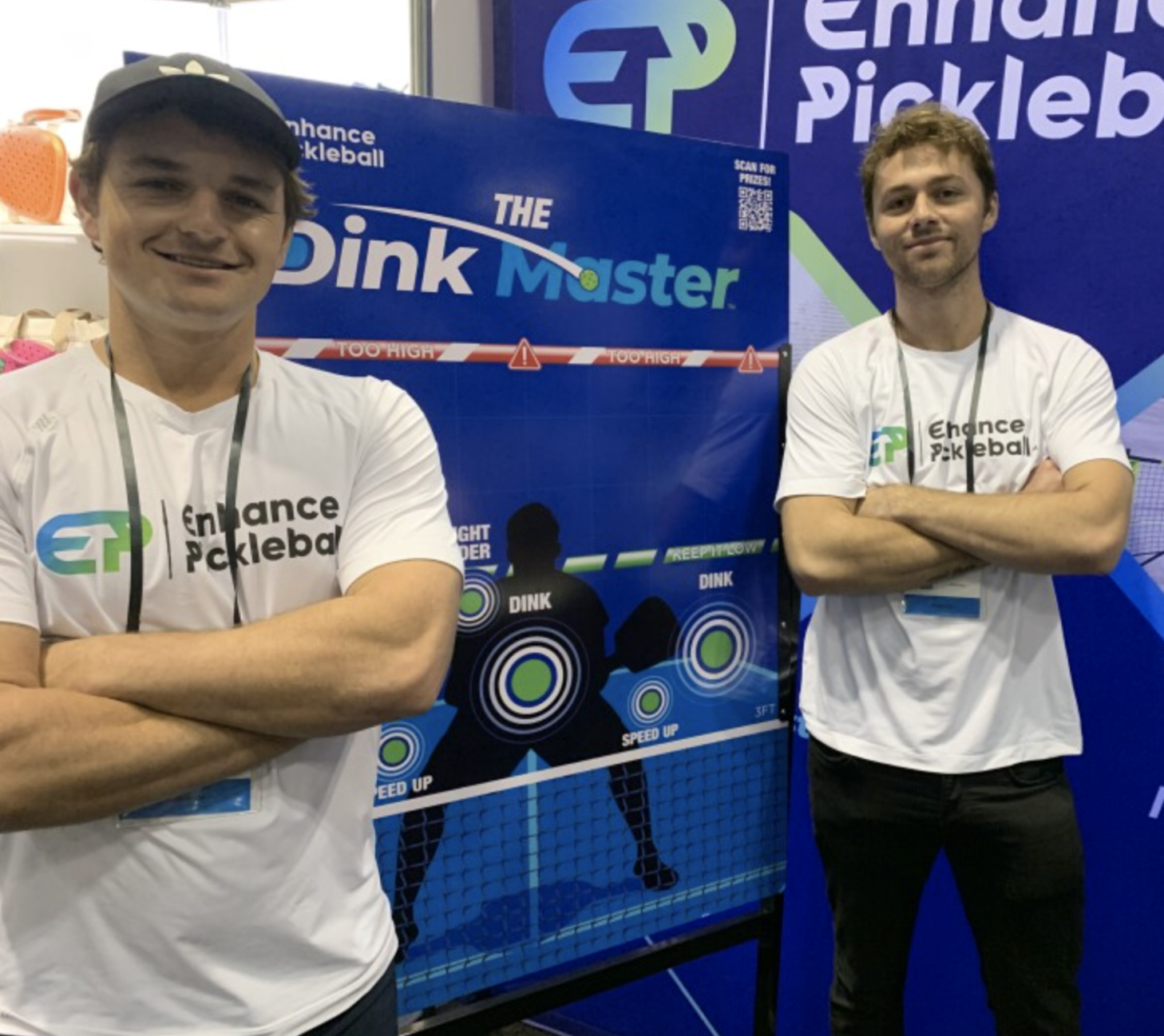
"We lost $67,000 in 48 hours," Connor says. "I remember thinking, 'This is what they mean when they say starting a business is hard.' We somehow survived. I still don't know how the math worked."
Despite the shipping catastrophe, the Dink Master became their flagship product. The combination of viral marketing and genuine utility—players could finally practice alone effectively—drove consistent sales. But by mid-2023, Enhanced Pickleball had plateaued.
The Paddle Pivot
Connor watched paddle companies with minimal marketing double his revenue.
"Most paddle companies are started by engineers," Connor explains. "We were just two tennis players who made good videos."
They spent months finding the right designers, burning through failed prototypes and false starts. Their first two paddles—essentially modeled from successful competitor brands—sold adequately but didn't move the needle. Connor knew they needed true innovation, not iteration.
The Daily Grind
Today, Connor and Drew operate from Los Angeles, maintaining what they freely admit is an unsustainable pace. They text constantly, argue about everything from colorways to marketing strategies, and push forward with the relentless energy of people who've found unexpected purpose.
"We work all day, every day," Connor says without complaint or pride, just stating fact. "It's not sustainable long-term, but we're 26 and 25. We can do this for maybe five more years."
The business metrics tell a success story: profitable operations, consistent growth, millions of social media views monthly.
But Connor measures progress differently—by how they stack up against established brands, by whether reviewers take their paddles seriously, by incremental improvements in paddle technology that only engineers would notice.
The Future of Noise
Connor sees the pickleball paddle industry eventually resembling golf more than tennis—numerous viable brands serving different market segments rather than a few dominant players. The technology isn't complex enough, he argues, for any company to maintain a permanent moat.
"Think about it. A paddle is just a combination of facing, core, and handle," he explains. "It's not an iPhone. Once everyone figures out the optimal combinations within USA Pickleball's rules, it becomes about brand, marketing, and distribution."
Enhance Pickleball's advantages—a massive social media following, direct-to-consumer expertise, and genuine connections to the playing community—position them well for this future. But Connor remains pragmatically cautious. Selkirk has a decade's head start. Joola brings table tennis industry resources. Major sporting goods companies circle the space, waiting for the right entry point.
Still, on mornings when Connor watches their latest video cross a million views, or when Drew shows him presale numbers for their newest paddle, or when they walk into a tournament and see players using Dink Masters, the accidentally successful entrepreneurs allow themselves a moment of satisfaction.
"Five years ago, I was a broken-footed college tennis player making eye masks in my parents' house," Connor reflects. "Drew was going to be a tennis pro. Neither of us planned this. But maybe that's why it works—we had nothing to lose and everything to prove."
The next morning arrives with familiar rhythm. Connor wakes at 6 a.m. to film a coaching video in the dawn light that makes Southern California famous. Drew edits until the footage becomes something more—content that will inspire thousands to buy paddles they may not need but suddenly want. They'll ship the newest iteration of the Dink Masters that finally fit in regulation boxes, respond to customer service emails with the attention of people who remember when every sale mattered, and push forward with the relentless optimism of accidental entrepreneurs who stumbled into purpose.
The broken bones healed stronger. The failed tennis dreams transformed into something neither expected but both now can't imagine abandoning. In the exploding world of pickleball, two former college players are building an empire one viral video, one innovative product, one 18-hour day at a time.
The business that launched with parking lot tape now shapes how a million players think about improvement.
Connor Hance and Drew Baird didn't plan to become pickleball entrepreneurs. But then again, the best stories rarely follow the script.
Lorem ipsum dolor sit amet, consectetur adipiscing elit. Suspendisse varius enim in eros elementum tristique. Duis cursus, mi quis viverra ornare, eros dolor interdum nulla, ut commodo diam libero vitae erat. Aenean faucibus nibh et justo cursus id rutrum lorem imperdiet. Nunc ut sem vitae risus tristique posuere.
Lorem ipsum dolor sit amet, consectetur adipiscing elit. Suspendisse varius enim in eros elementum tristique. Duis cursus, mi quis viverra ornare, eros dolor interdum nulla, ut commodo diam libero vitae erat. Aenean faucibus nibh et justo cursus id rutrum lorem imperdiet. Nunc ut sem vitae risus tristique posuere.